

Company : Nainital floweri tech
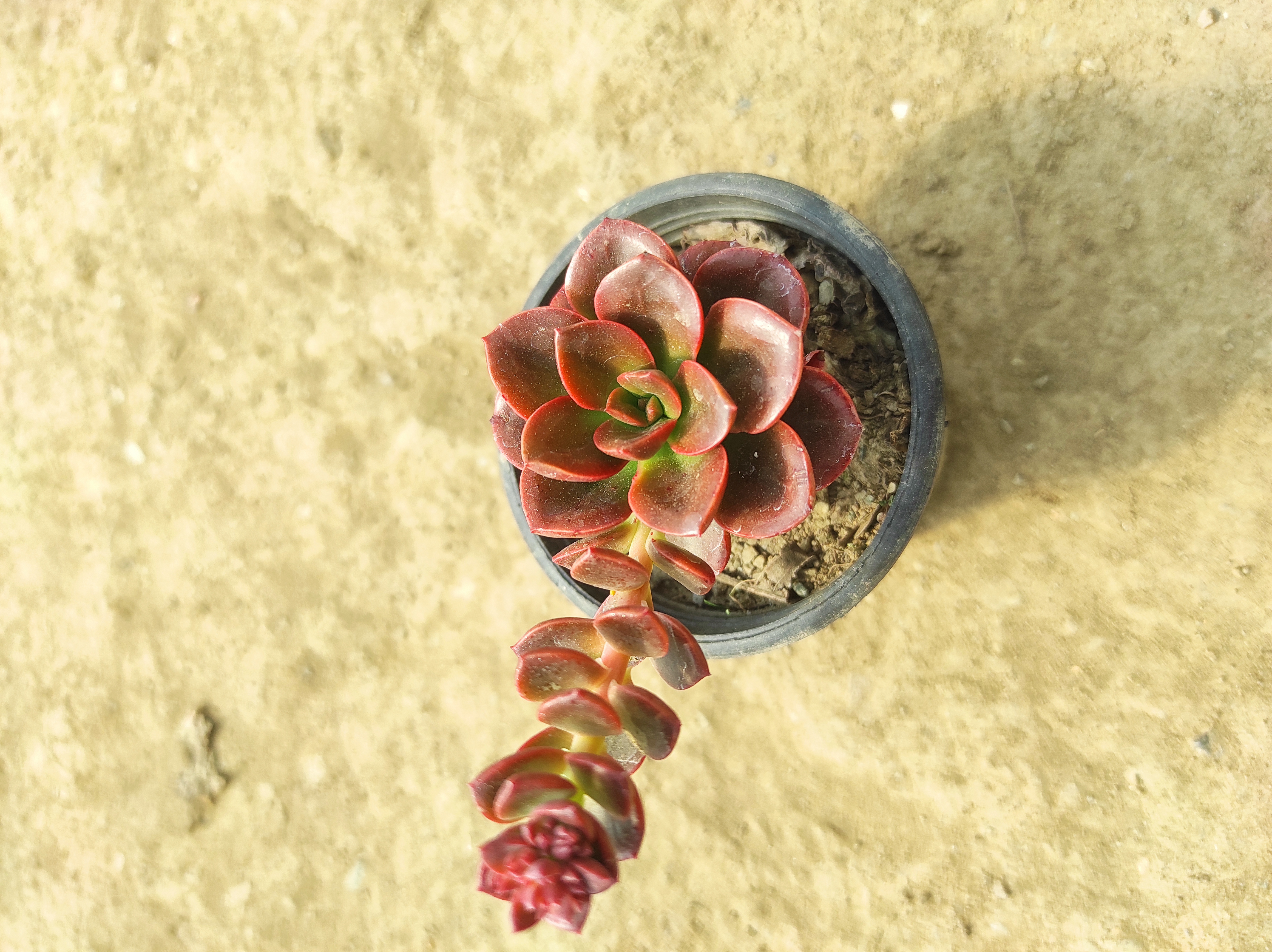
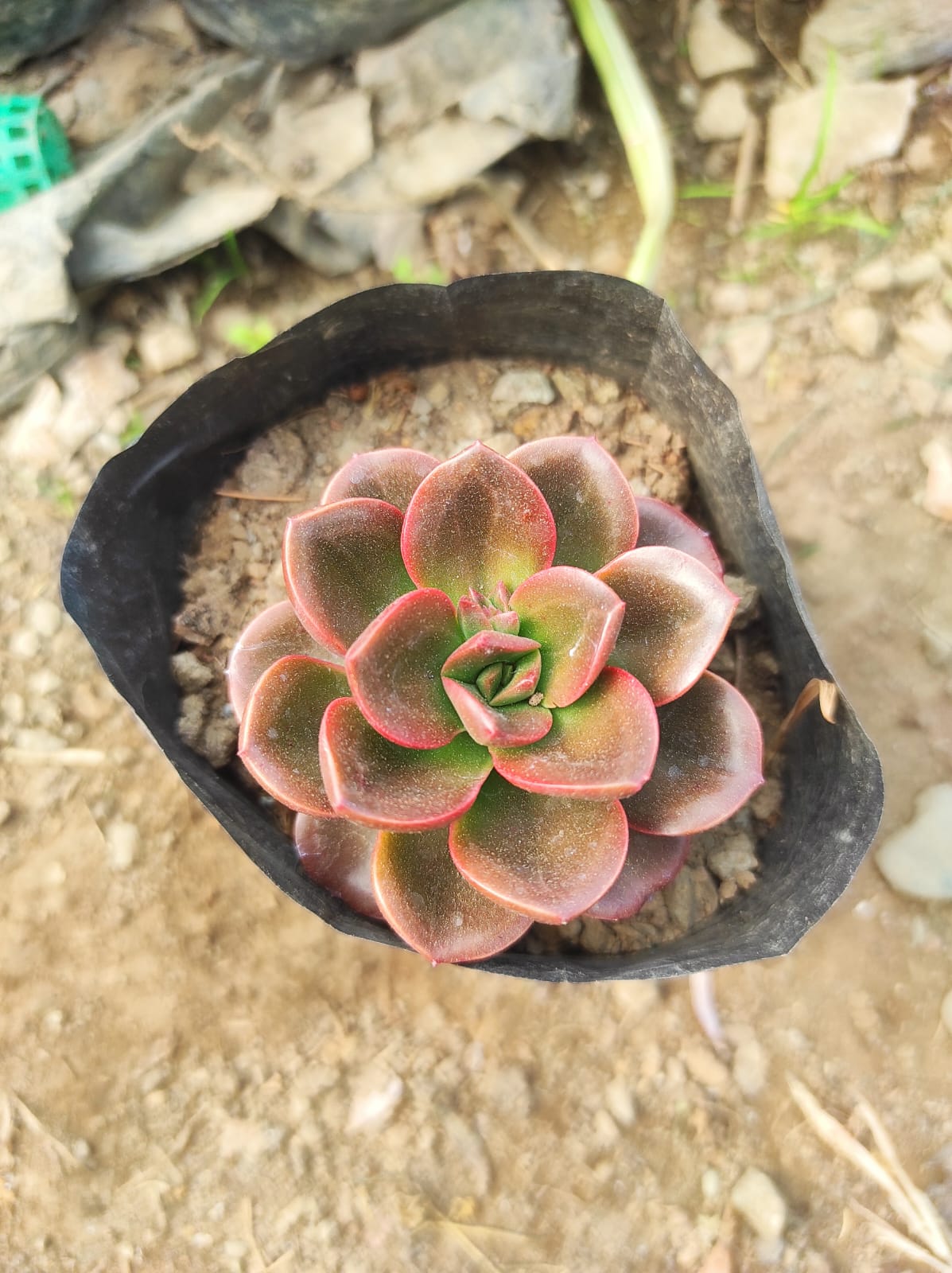
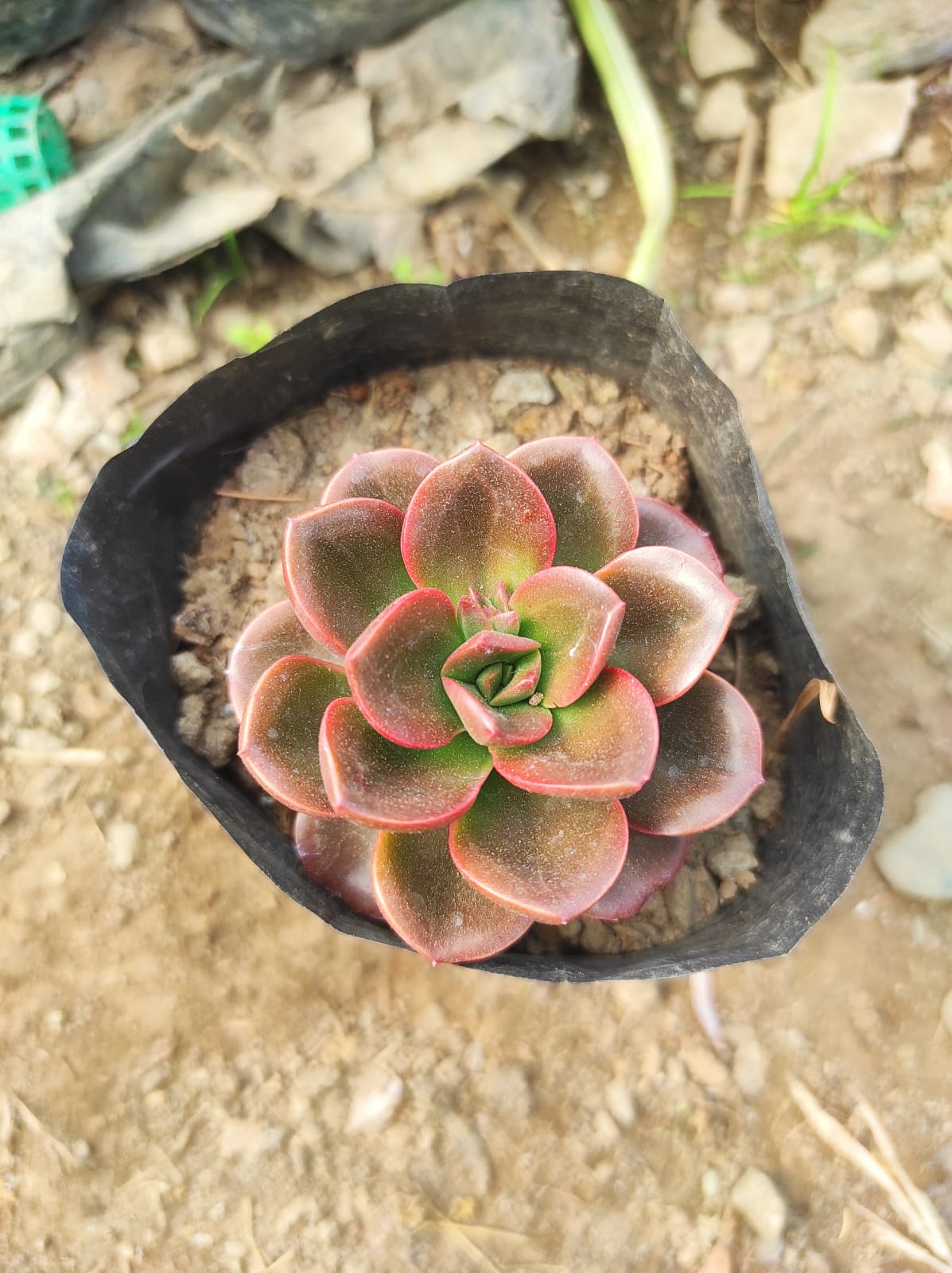
Echeveria 'Melaco': A real standout in arrangements because of its height and distinctive coloration. The gradient of tones can include shades of copper, plum, salmon, and chocolate brown, sometimes with a sea green center. If growing indoors, keep it near a sunny window for the brightest colors. Its rich, glossy leaves are the inspiration for the name 'Melaco', or "molasses" in Portuguese.
Echeveria need bright sunlight to maintain their colors and compact rosette form. They will not survive a hard frost, but if there is a risk of freezing temperatures they can be brought indoors to grow on a sunny window sill or under a grow light.
Like most succulents, they need great drainage and infrequent water to prevent rot. Pick containers with drainage holes and use well-draining cactus and succulent soil with 50% to 70% mineral grit such as coarse sand, pumice, or perlite. Water deeply enough for water to run out the drainage hole, then wait for the soil to fully dry before watering again.
Also known as "Mexican Hens & Chicks", Echeveria can produce new offsets or "chicks" around the base of the mother plant. These chicks can be left to form a tidy cluster or removed and transplanted. Additionally, Echeveria can be propagated from stem cuttings or mature leaves. A real standout in arrangements because of its height and distinctive coloration. The gradient of tones can include shades of copper, plum, salmon, and chocolate brown, sometimes with a sea green center. If growing indoors, keep it near a sunny window for the brightest colors. Its rich, glossy leaves are the inspiration for the name 'Melaco', or "molasses" in Portuguese.
Echeveria need bright sunlight to maintain their colors and compact rosette form. They will not survive a hard frost, but if there is a risk of freezing temperatures they can be brought indoors to grow on a sunny window sill or under a grow light.
Like most succulents, they need great drainage and infrequent water to prevent rot. Pick containers with drainage holes and use well-draining cactus and succulent soil with 50% to 70% mineral grit such as coarse sand, pumice, or perlite. Water deeply enough for water to run out the drainage hole, then wait for the soil to fully dry before watering again.
Also known as "Mexican Hens & Chicks", Echeveria can produce new offsets or "chicks" around the base of the mother plant. These chicks can be left to form a tidy cluster or removed and transplanted. Additionally, Echeveria can be propagated from stem cuttings or mature leaves.
WhatsApp Order Call Now